
Keeping a home clean goes far beyond what meets the eye. While regular cleaning routines help maintain a tidy appearance, they often fail to address the hidden dirt, grime, and bacteria that accumulate in hard-to-reach areas. Over time, these unseen contaminants can affect not only the cleanliness of your home but also your health and overall well-being.
This is where deep cleaning plays a crucial role. Unlike standard cleaning, deep cleaning targets areas that are frequently overlooked, ensuring a more thorough and hygienic living environment. Deep cleaning goes beyond surface-level tidying, eliminating tough dirt and bacteria for a truly healthy home environment.
In this article, we delve into the process of deep cleaning and explain why it is crucial for maintaining a truly clean and healthy home.
What Is Deep Cleaning?
Deep cleaning is a thorough cleaning process that goes beyond everyday tasks, such as dusting, vacuuming, and wiping surfaces. It focuses on areas that are not typically covered during routine cleaning, such as behind appliances, inside cabinets, under furniture, and high-touch surfaces that accumulate germs over time.
This type of cleaning involves specialized tools, techniques, and cleaning agents designed to remove built-up dirt, grease, and bacteria. Deep cleaning is usually performed periodically rather than daily or weekly, making it an essential part of long-term home maintenance.
Targets Hidden Dirt in Hard-to-Reach Areas
One of the biggest advantages of deep cleaning is its ability to reach areas that are often neglected during regular cleaning routines. Dirt and dust tend to accumulate in places that are out of sight, such as:
- Behind and underneath furniture
- Inside vents and air ducts
- Under large appliances like refrigerators and ovens
- In grout lines and tile edges
- Behind bathroom fixtures
These hidden areas can quickly become breeding grounds for dust, debris, and even pests if left unattended. Deep cleaning ensures that these spaces are thoroughly cleaned, preventing the buildup of contaminants over time.
By addressing these overlooked areas, deep cleaning helps maintain a more complete level of cleanliness throughout the entire home.
Eliminates Bacteria and Germs
Regular cleaning may remove visible dirt, but it does not always eliminate harmful bacteria and germs. High-touch surfaces such as door handles, light switches, countertops, and bathroom fixtures can harbor bacteria that spread easily within the household.
Deep cleaning involves the use of disinfectants and sanitizing techniques that target these harmful microorganisms. This process helps reduce the risk of illness and creates a safer environment for everyone in the home.
Bathrooms and kitchens, in particular, benefit significantly from deep cleaning. These areas are prone to moisture and food residue, which can encourage the growth of bacteria if not properly addressed. A thorough deep clean ensures that these spaces are not only clean but also hygienic.
Removes Stubborn Grease and Grime
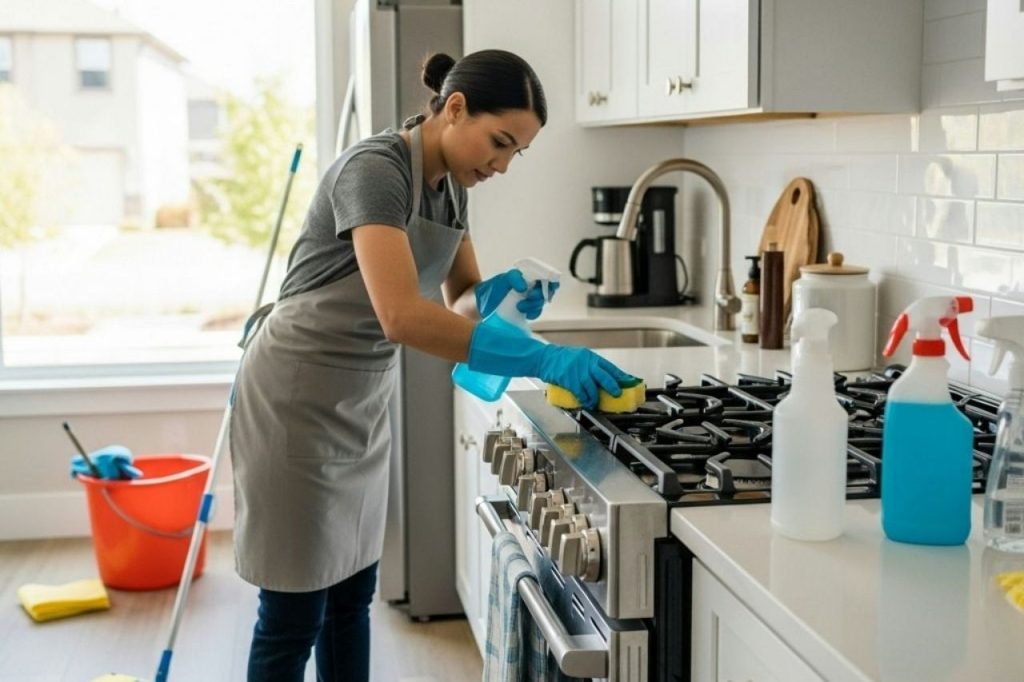
Grease and grime gradually build up in areas that are difficult to clean with everyday methods. Kitchens are especially vulnerable, as cooking oils and food particles accumulate on surfaces, cabinets, and appliances.
Deep cleaning uses stronger cleaning solutions and techniques to break down stubborn grease that regular cleaning products may not fully remove. This includes:
- Degreasing kitchen cabinets and backsplashes
- Cleaning oven interiors and stovetops
- Removing buildup from exhaust fans and range hoods
By eliminating these layers of grime, deep cleaning restores surfaces to their original condition and improves the overall appearance of the home.
Improves Indoor Air Quality
Hidden dust, allergens, and pollutants can significantly impact indoor air quality. These particles often accumulate in carpets, upholstery, curtains, and ventilation systems, circulating throughout the home and potentially triggering allergies or respiratory issues.
Deep cleaning helps remove these contaminants by thoroughly cleaning and vacuuming soft furnishings and hard-to-reach areas. This includes:
- Steam cleaning carpets and rugs
- Vacuuming upholstery and mattresses
- Dusting vents, baseboards, and ceiling corners
By reducing airborne particles, deep cleaning creates a healthier indoor environment, making it especially beneficial for individuals with allergies, asthma, or sensitivities.
Prevents Mold and Mildew Growth
Moisture-prone areas such as bathrooms, kitchens, and laundry rooms are highly susceptible to mold and mildew growth. These fungi can develop in damp corners, grout lines, and poorly ventilated spaces, often going unnoticed until they become a larger issue.
Deep cleaning addresses these areas by removing moisture buildup and applying cleaning solutions that eliminate mold spores. Regular deep cleaning can help prevent mold from spreading, protecting both the home and the health of its occupants.
Keeping these areas clean and dry also reduces unpleasant odors commonly associated with mold and mildew.
Extends the Life of Surfaces and Furnishings
Dirt, dust, and grime do more than compromise cleanliness—they can gradually wear down surfaces and furnishings, shortening their lifespan and diminishing their appearance. Carpets can become embedded with dirt, upholstery can lose its freshness, and tile grout can deteriorate if not properly maintained.
Deep cleaning helps preserve the condition of these materials by removing the buildup that contributes to damage. For example:
- Carpet fibers remain intact and last longer
- Upholstery maintains its appearance and comfort
- Tile and grout stay cleaner and more durable
By investing in regular deep cleaning, homeowners can protect their belongings and reduce the need for costly repairs or replacements.

Enhances Overall Home Hygiene
A truly clean home is not only visually appealing but also hygienic. Deep cleaning ensures that every part of the home is thoroughly cleaned and sanitized, creating a safer and more comfortable living environment.
This level of cleanliness is particularly important for households with:
- Children
- Elderly family members
- Pets
- Individuals with weakened immune systems
By eliminating hidden dirt and bacteria, deep cleaning helps maintain a higher standard of hygiene throughout the home.
Reduces Stress and Improves Comfort
Living in a clean and organized environment has a positive impact on mental well-being. Clutter, dirt, and hidden grime can contribute to feelings of stress and discomfort, even if they are not immediately visible.
Deep cleaning provides a sense of renewal by transforming the home into a fresh and inviting space. Knowing that every corner of the home has been thoroughly cleaned can bring peace of mind and improve overall comfort.
While often overlooked, this psychological benefit significantly contributes to a healthier and more comfortable lifestyle.
Complements Regular Cleaning Routines
While deep cleaning is essential, it is not meant to replace regular cleaning. Rather than being a one-time solution, deep cleaning enhances routine cleaning efforts, keeping your home consistently spotless.
Regular cleaning helps manage day-to-day dirt and mess, while deep cleaning addresses the buildup that occurs over time. Together, these two approaches create a balanced cleaning routine that keeps the home consistently clean and hygienic.
Scheduling deep cleaning periodically—whether quarterly or seasonally—can make regular cleaning more effective and manageable.
Conclusion
Deep cleaning is a powerful way to eliminate hidden dirt, bacteria, and allergens that regular cleaning often misses. By targeting hard-to-reach areas, removing stubborn grime, and improving indoor air quality, it creates a healthier and more comfortable living environment.
From preventing mold growth to extending the life of household surfaces, the benefits of deep cleaning go far beyond appearance. It is an essential practice for maintaining both the cleanliness and hygiene of any home.
Incorporating deep cleaning into your routine ensures that your home is not just clean on the surface but truly clean at every level.